
Diplomatic gesture underscores India’s strategic balancing between Iran and Israel amid regional tensions
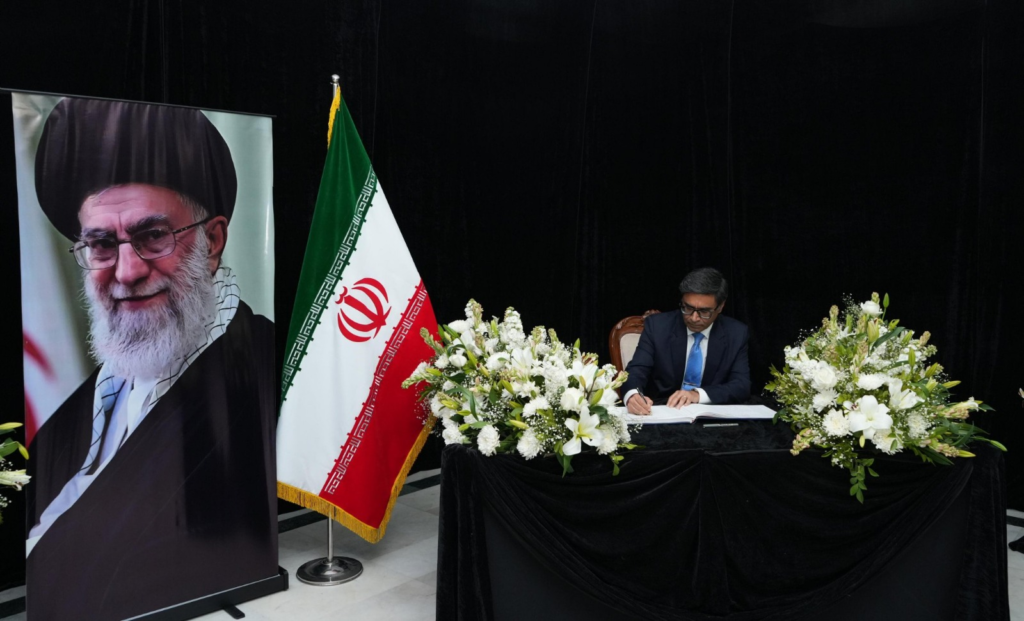
New Delhi: India’s Foreign Secretary Vikram Misri signed the Condolence Book at the Embassy of Iran in New Delhi on Thursday, mourning the death of Supreme Leader Ayatollah Ali Khamenei, who was killed at the age of 86 in U.S. and Israeli strikes on February 28.
The embassy had arranged a solemn setting with flags, white flowers, and fans, where diplomats, including Russian Ambassador Denis Alipov, had earlier signed the book. Misri later met with Iranian Ambassador Dr Mohammad Javad Fathali, offering India’s condolences on behalf of the government.
India’s decision to sign the condolence book is being framed as a calibrated diplomatic signal rather than a political endorsement. The government described it as a “graded response, an official level participation, not a political statement of mourning.”
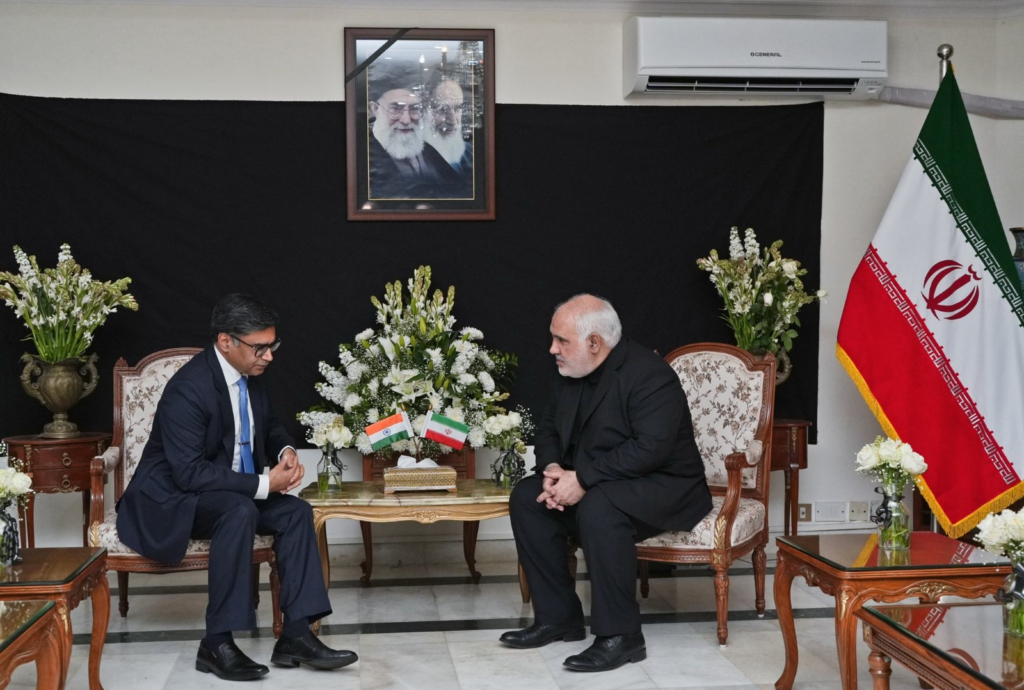
By keeping the gesture bureaucratic and discreet, New Delhi acknowledges protocol and maintains official channels with Iran, an important regional partner, while avoiding a public position on the killing or the wider conflict involving Israel and the United States.
This diplomatic move reflects India’s careful balancing act in the region. It can be seen as an attempt to maintain strategic ties with Iran, including key projects like the Chabahar Port, while continuing close cooperation with Israel amid ongoing regional tensions.
The signing of the condolence book marks a significant moment in diplomatic protocol, demonstrating India’s commitment to respecting international norms while navigating complex geopolitical realities in the Middle East.
Also Read: Zakir Hussain Laskar and Karim Uddin Barbhuiya Quit AIUDF Ahead of Rajya Sabha Polls