Opposition calls pact “one-sided” and warns of risks to tariffs, digital control, energy independence and rural incomes; government defends it as growth-oriented
The interim India–United States trade agreement, announced on February 2, 2026, has sparked sharp political debate and widespread protests across the country, with opposition leaders, farmers’ unions and workers’ groups questioning its long-term impact on India’s economic sovereignty and rural livelihoods.
While the government maintains that the pact will strengthen bilateral trade and expand market access for Indian businesses, critics argue that the terms appear uneven. They allege that U.S. tariffs on Indian goods remain relatively high, while India has reduced or eliminated duties on several American products, potentially increasing imports without matching benefits for Indian exporters.
Opposition voices have also raised concerns over digital trade and data policies, claiming the agreement could dilute India’s control over data localisation and taxation of global tech firms. Questions have further been raised about energy procurement, with critics warning that external influence over oil purchases may weaken strategic autonomy.
The strongest resistance has come from the farming community. Farmer groups fear that cheaper, heavily subsidised U.S. agricultural imports could undercut small Indian producers who lack comparable financial support. These concerns culminated in a nationwide strike, with unions warning of rising rural distress if safeguards are not strengthened.
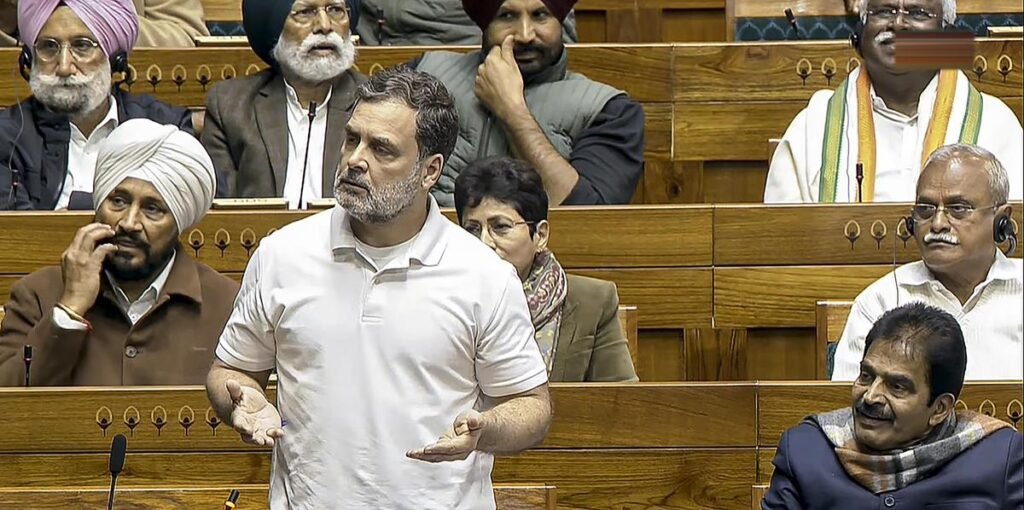
Inside Parliament, the issue has triggered heated exchanges. Leader of the Opposition Rahul Gandhi described the pact as a “wholesale surrender,” arguing it compromises India’s control over food security, data and trade policy. Other leaders echoed similar concerns, calling the deal harmful to farmers and small businesses. The government, however, dismissed the criticism as politically motivated and insisted that sensitive sectors remain protected.
With protests on the streets and fierce debate in the House, the trade pact has emerged as one of the most contentious economic issues of the year. As discussions continue, the agreement remains at the centre of a larger question: how to balance global partnerships with the protection of India’s farmers, workers and national interests.
Also Read: Mosca Brothers Script History as Italy Rout Nepal in T20 World Cup